
About the Black Stone
It is the stone located at the corner where the Tawaf around the Sacred House of Allah begins, and it is recommended to kiss it for those who are able. It is from the stone of Paradise; as narrated by Al-Tirmidhi in his collection and Al-Azraqi in the news of Mecca and others from the Prophet ﷺ. What is the story of the Black Stone in the Kaaba? The Black Stone descended from Paradise to Earth as a divine gift. It was sent to the friend of Allah, Ibrahim, and his son Ismail - peace be upon them - while they were building the Kaaba. Initially, the stone was white, but over time it turned black due to the sins of mankind, as narrated in the hadith from Sa'id ibn Jubair from Ibn Abbas - may Allah be pleased with them - who said: The Messenger of Allah ﷺ said: "The Black Stone descended from Paradise, and it was whiter than milk, but the sins of the children of Adam darkened it."
Description of the Black Stone
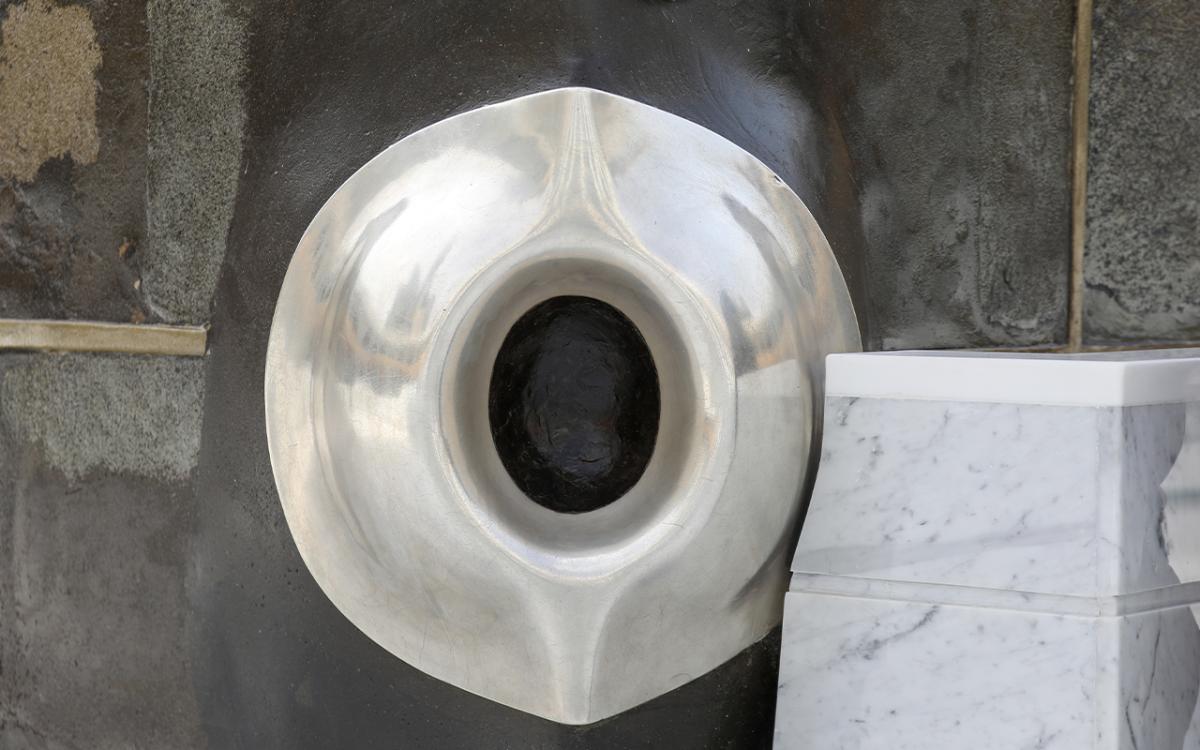
It is oval in shape, black with a reddish tint, with red spots and yellow curves. Its diameter is about thirty centimeters, surrounded by a silver frame that is ten centimeters wide. The Black Stone is located in the wall of the Kaaba at the southeastern corner of the Kaaba structure, at a height of one and a half meters. It was placed by our master Ibrahim - peace be upon him - in its place in the Kaaba as a sign to start the Tawaf from it. Currently, the Black Stone consists of eight small pieces, which are set in an adhesive material made of a mixture of wax, musk, and amber. This fragmentation is due to historical events, including its theft by the Qarmatians in the 4th century AH.
The Origin of the Black Stone and Its Notable Secrets
As for the origin of the Black Stone, it has been narrated in the hadith from Sa'id ibn Jubair from Ibn Abbas - may Allah be pleased with them - who said: The Messenger of Allah ﷺ said: "The Black Stone descended from Paradise, and it was whiter than milk, but the sins of the children of Adam darkened it."
Today, the Black Stone consists of eight small pieces, which are set in an adhesive material made of a mixture of wax, musk, and amber. This fragmentation is due to historical incidents, including the attempt to destroy the stone and its theft by the Qarmatians in the 4th century AH, in the year 317 AH when they attacked Mecca under the leadership of Abu Tahir al-Qarmati and killed some of the pilgrims and captured others. They uprooted the doors of the Kaaba and removed the Black Stone from its place and stole it. They then transported it to the region of Al-Jash and ordered its people to perform Hajj there, but they refused. However, after years of attempts, the Black Stone was returned to the honored Kaaba in the year 339 AH.
One of the notable secrets about the Black Stone is its testimony on the Day of Judgment for those who touched it rightly. Ibn Abbas reported that the Messenger of Allah ﷺ said: "By Allah, Allah will raise it on the Day of Resurrection with two eyes by which it sees and a tongue that speaks, testifying for those who touched it rightly."
Regarding its virtues, it has been narrated from Abdullah ibn Amr ibn al-As - may Allah be pleased with them - that he heard the Messenger of Allah ﷺ say: "Indeed, the stone and the station are two rubies from the rubies of Paradise; Allah concealed their light, and if their light had not been concealed, it would have illuminated what is between the east and the west."
The Importance of Kissing the Black Stone During Tawaf
What is the wisdom behind kissing the Black Stone? Does kissing it truly forgive sins?
It is recommended for Muslims during Tawaf, whether in obligatory Tawaf or voluntary Tawaf during Hajj and Umrah, to kiss the Black Stone. It has been reported that Umar ibn al-Khattab - may Allah be pleased with him - used to kiss the Black Stone and say: "I know that you are a stone, and if I had not seen the Messenger of Allah ﷺ kiss you, I would not have kissed you." Regarding this, Al-Muhibb al-Tabari, may Allah have mercy on him, said that Umar said this because the people had recently been accustomed to idol worship, and Umar feared that the ignorant might think that touching the stone was a form of glorifying certain stones as the Arabs did in the pre-Islamic era. Umar - may Allah be pleased with him - wanted to teach the people that touching it is following the action of the Prophet ﷺ, not that the stone itself benefits or harms as was believed in the idols during the pre-Islamic era. Thus, kissing here is not to sanctify the stone itself, but rather an expression of obedience and submission to Allah and His noble Messenger ﷺ.
The Virtue of Touching and Kissing the Black Stone
The Prophet ﷺ said: "Indeed, touching the right corner and the Black Stone removes sins." This indicates that touching the Black Stone and receiving it wipes away sins as leaves fall from trees in autumn.
Renewal of the Black Stone Throughout History
The renewals that occurred for the Black Stone included the process of surrounding it with silver frames. The noble companion Abdullah ibn al-Zubair was the first to surround the Black Stone with silver to protect it after it was damaged. Since then, caliphs and sultans have continued to renew the silver frame of the stone. In the year 1375 AH, King Saud bin Abdulaziz placed a new silver frame, and the stone was restored during the reign of King Fahd bin Abdulaziz in the year 1422 AH.
Is the Black Stone the Same as the Yemeni Corner in the Kaaba?
The honored Kaaba currently has four corners: The Black Stone corner, the northern corner, the western corner, and the Yemeni corner, which the Tawaf passes before reaching the Black Stone. It is called Yemeni because it is in the direction of Yemen. It has been mentioned in the virtue of touching and receiving it that the Prophet ﷺ said: "Indeed, touching the Black Stone and the Yemeni corner removes sins." Therefore, the Black Stone is different from the Yemeni corner in the Kaaba. Many secrets that the Black Stone holds in the Kaaba remain obscure! But it is certain that it carries many profound spiritual and historical meanings in Islam, starting from its descent from the heavens to its status in the Islamic structure of the Kaaba, from its mysterious secrets to its astonishing miracles. Do not miss the opportunity to visit the Black Stone when you visit Mecca.